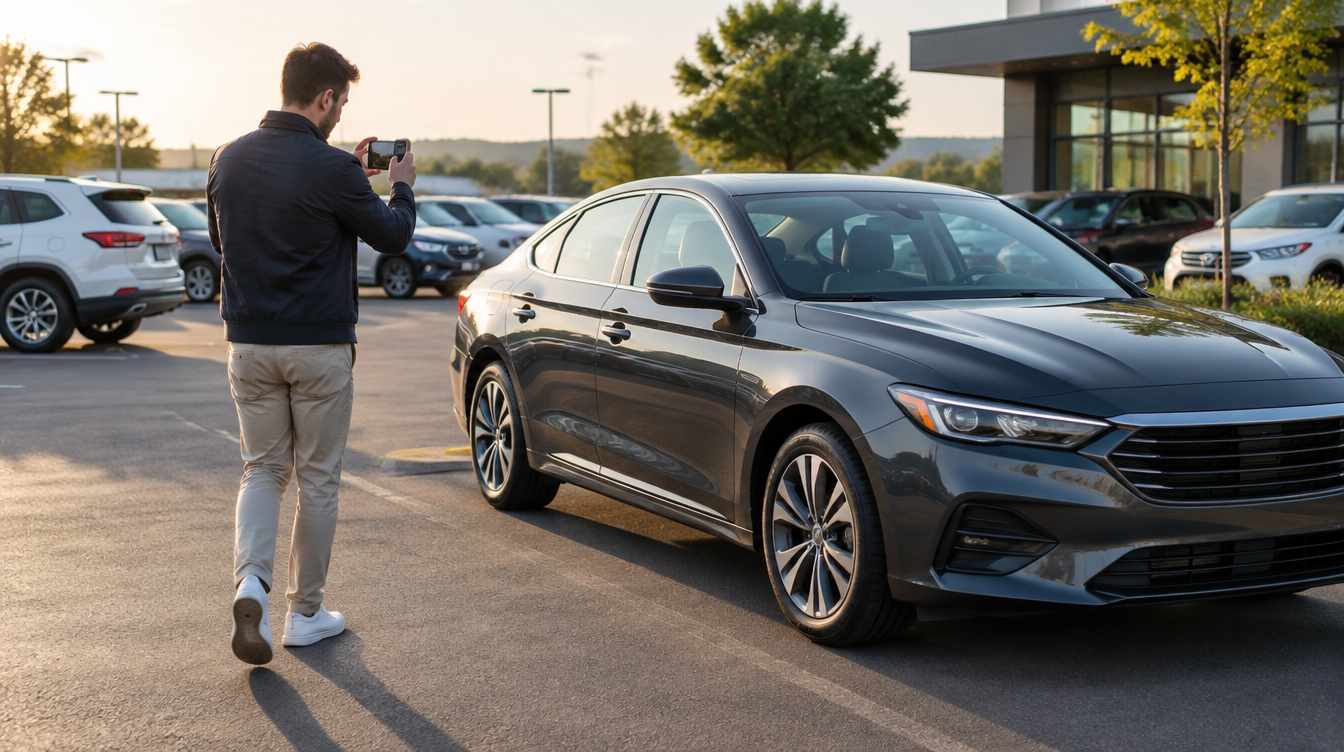
Who Should Own Vehicle Photos in a Growing Fleet?
With one or two cars, the answer to "who takes the photos" is obviously you, and the question never really comes up as a decision at all. Once a fleet grows to a dozen or more vehicles, that same question turns into a genuine operational choice, and getting it wrong is one of the more common, quiet ways that claim evidence steadily gets worse as a business scales up.
There are two broad models most growing fleets end up choosing between, each with a real trade-off attached that only becomes obvious once you've actually tried running it that way for a while.
Option one: one person owns the whole loop
Some operators assign a single person to clean, photograph, and deliver each vehicle from start to finish, end to end. The advantage is clear accountability: if something's inconsistent, there's exactly one person to ask about it. The trade-off is throughput, since one person can only realistically turn over so many cars in a single day before quality starts to suffer.
Option two: specialized stations
Other fleets split the process across roles: one person cleans, another photographs, a third delivers the vehicle to the guest. This scales faster in raw throughput terms, but it introduces real handoff risk. If the photo step gets rushed or skipped because "someone else probably already did it," your evidence quality quietly degrades exactly when you have more vehicles and more risk exposure, not less.
A hybrid that many fleets land on
A common middle path keeps photography as a single dedicated step regardless of who cleans or delivers, treating it almost like a quality gate rather than just another task in the chain. Whoever finishes cleaning hands the car to whoever is on photo duty that day, and nobody delivers a vehicle to a guest until that gate has been checked off. It captures most of the throughput benefit of specialization while protecting the one step that actually matters most if a claim ever comes up later.
The deciding factor
It's less about raw fleet size and more about whether you can build a system where photo quality doesn't depend heavily on any one person's mood or energy on a given day. A fixed angle checklist combined with a simple completion check, confirming every required angle actually got captured before moving on, matters more in practice than which organizational structure you ultimately choose.
The takeaway
Whichever model you pick, treat photo completeness as a real, tracked metric rather than an assumption you take on faith. A fleet that actively tracks the percentage of trips with a full, complete photo set catches gaps long before a disputed claim ever forces the question into the open.