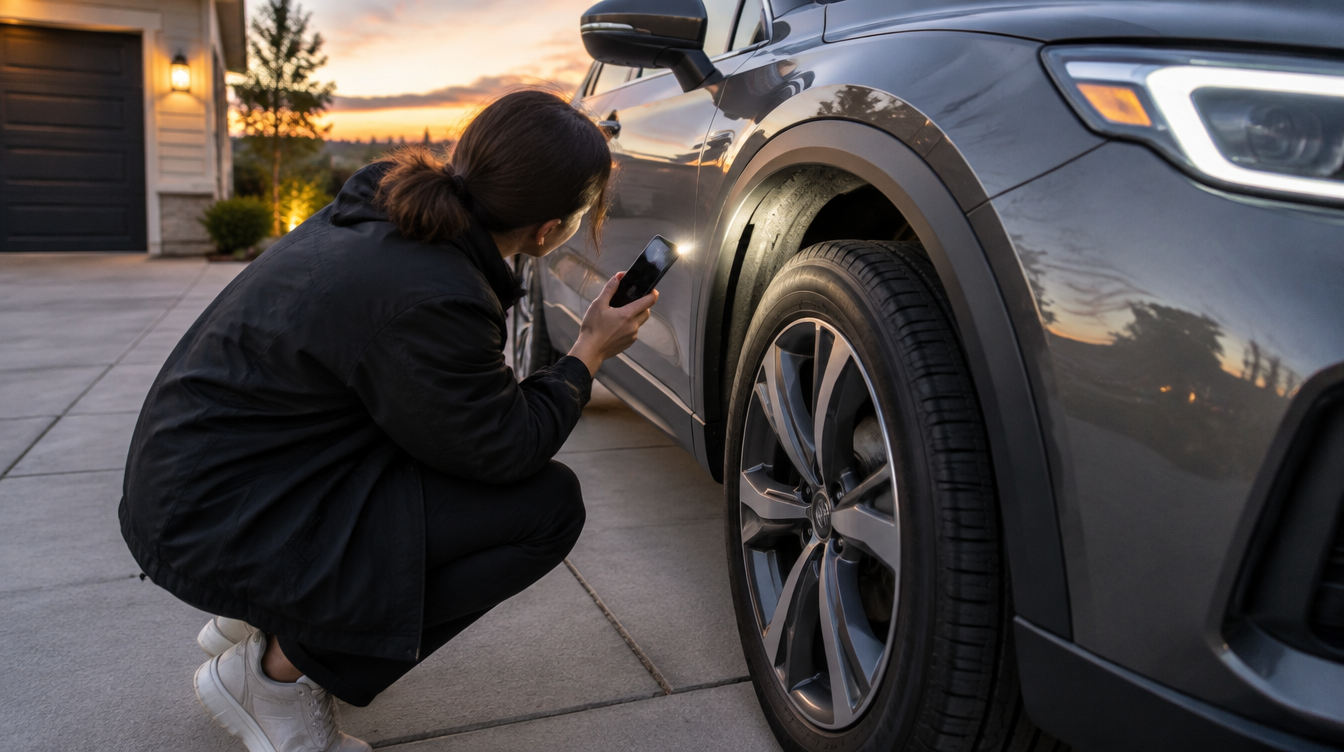
What to Do the Moment You Find Damage After a Trip
Finding damage on a returned car triggers a real adrenaline spike: annoyance, frustration, sometimes genuine financial worry about a repair bill you weren't expecting. That's exactly the moment a checklist helps most, because it gives your hands something concrete and useful to do before your emotions write a message you'll almost certainly regret sending an hour later.
The sequence below is short on purpose. When you're frustrated, you want something you can follow almost automatically, not a long document you have to think your way through step by step.
Step 1: Photograph before you touch anything
Before you clean it, before you poke at it to see how bad it really is, before you do anything else at all, photograph the damage from multiple angles with good lighting. This is the single most time-sensitive step in the entire process, and it's the one people skip most often because they're too busy reacting emotionally in the moment.
Step 2: Compare against your pre-trip photos
Pull up the condition photos from immediately before this specific trip. If you don't already have them, this is a hard but valuable lesson in exactly why every trip needs a pre-trip photo set going forward. Work with whatever you do have available right now, even if it's incomplete.
Step 3: Note the timing precisely
When did the trip officially end? When did you personally discover the damage? Write both of those down right now, while the details are still fresh, rather than trying to reconstruct an accurate timeline later purely from memory.
Step 4: Get a repair estimate before deciding anything
Don't file a claim, and don't decide to simply eat the cost yourself, until you actually have a real number in hand. Guessing at cost leads to bad decisions in both directions: filing a formal claim for something genuinely trivial, or quietly skipping a claim on something that turns out to be expensive.
Step 5: Message the guest factually, not emotionally
State plainly what you found and what you're doing about it next. Skip accusations entirely, even if you're fairly confident about what happened. A calm, factual message holds up far better if the situation escalates later, and it keeps the door open if there turns out to be an innocent explanation you hadn't considered.
Why the order of these steps matters
Doing this out of order costs you real evidence. Message the guest angrily before you've photographed anything, and you've already tipped your hand emotionally while the actual documentation is still incomplete. Get an estimate before noting the timing precisely, and you might find yourself unsure later exactly when you discovered the damage relative to when the trip ended, a detail that can matter if the case ever gets disputed.
None of this makes the initial discovery any less annoying in the moment. But following the same five steps every single time turns a genuinely stressful moment into a process you already know exactly how to run, which is worth a great deal on the day it actually happens.