The Boring Paperwork That Saves Turo Hosts From Big Headaches
Ask any host with a few years of experience what changed the most between their first year and their third, and a surprising number will say the same thing without hesitating: documentation. Not pricing strategy, not vehicle selection, not some clever growth trick. Just a boring, repeatable habit of writing things down and taking photos long before anyone actually needs them for anything.
It sounds almost too simple to matter, which is exactly why so many new hosts skip it until the first time they wish they hadn't. The hosts who never seem to get burned by a bad claim usually have this one habit in common, and almost nothing else.
Why relying on memory doesn't work
A claim rarely gets resolved on the day it happens. By the time anyone actually asks you for evidence, it's often been a week or even a month, and by then your memory of exactly what the car looked like is simply not evidence, however confident you feel about it. A timestamped photo taken before the trip started is worth far more than the clearest recollection you can offer after the fact, and reviewers know the difference immediately.
This isn't about distrust of guests. It's about the basic reality that disputes get decided by what can be shown, not by what can be remembered, and photos are the only thing that travels well across weeks. A guest who genuinely didn't cause the damage benefits from good documentation too, since it clears them just as fast as it implicates someone who did.
The four things worth documenting every single time
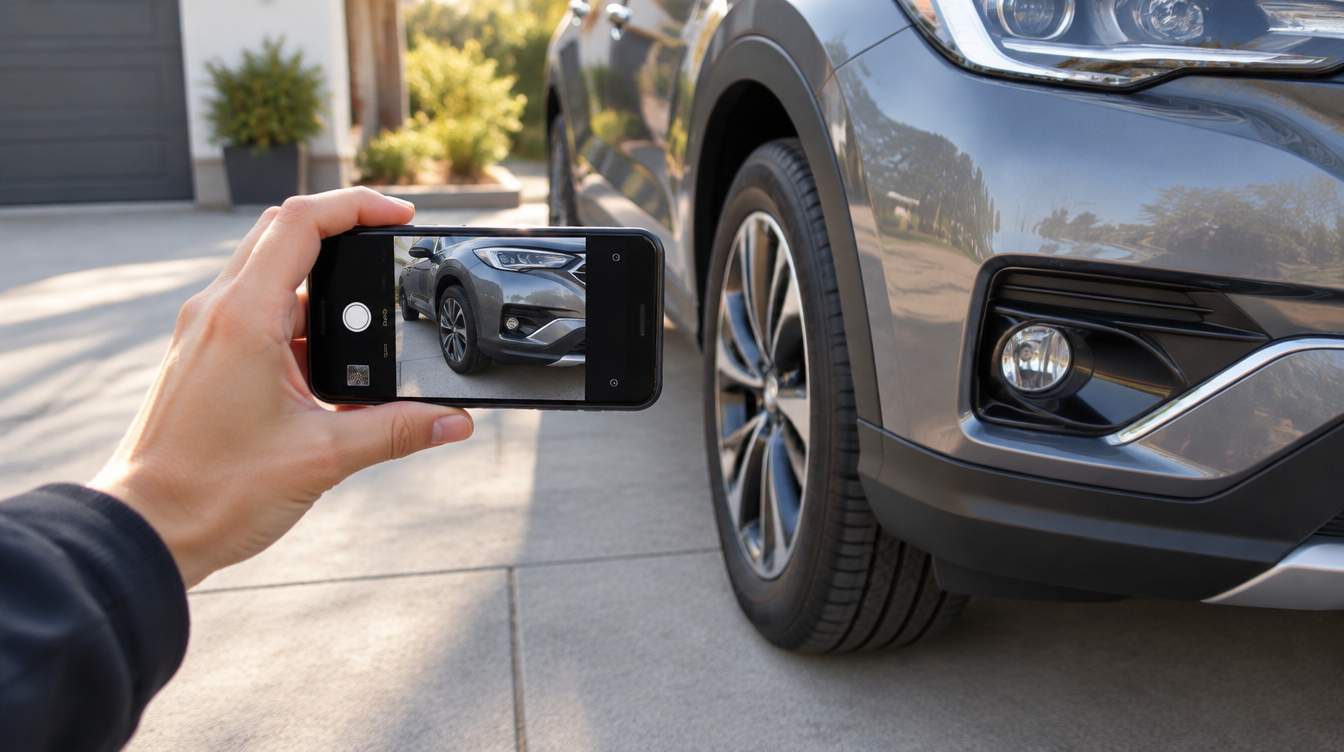
- Pre-trip condition photos: all four corners, the wheels, and the interior, on every single trip, with no exceptions carved out for regular guests you feel comfortable with.
- Fuel and mileage at handoff: a simple dashboard photo settles more disputes on its own than an entire back-and-forth conversation ever could.
- Any message that references condition: a guest mentioning a scratch, a smell, or a warning light in a message is worth a screenshot the moment you see it, not later when you're trying to reconstruct the thread.
- Return condition photos: taken before you drive off in the car yourself, not after you've already gotten home and the moment has passed.
What this looks like on a real trip
Picture a normal Tuesday handoff. Before the guest even sits down, you've walked the car and taken eight photos: four corners, both front seats, the trunk, the dash showing fuel and mileage. It takes about ninety seconds. Three days later the car comes back with a curb rash on the front wheel that wasn't there before. Because you have that baseline, the comparison is instant and undeniable, and there's no conversation to have about whether it was already there.
The habit matters more than the tool
You don't need special software or a fancy checklist app to do this well. What actually matters is that it happens the exact same way every time, for every vehicle, without you deciding case by case whether this particular trip probably doesn't need it. The trips that feel the least likely to cause trouble are, ironically, often the ones that end up needing documentation the most, precisely because nobody was being extra careful that day.
Five minutes of photos before and after a trip is a small, predictable tax on your time. Skipping it is a much bigger, much less predictable tax on your patience the one time it actually matters, and you never know in advance which trip that will be.